Reviewed by Barbara Lehtiniemi
The idea for Katy Hessel’s The Story of Art Without Men was born out of her realization that most art on display in galleries is by men. Hessel, who has a BA in Art History, found she could not even name twenty women artists off the top of her head.

“A study published in 2019 found that in the collections of eighteen major US art museums, 87 per cent of artworks were by men, and 85 per cent by white artists,” writes Hessel. “Currently, women artists make up just 1 per cent of London’s National Gallery collection. This same museum only staged their first ever major solo exhibition by a historic female artist, Artemisia Gentileschi, in 2020.”
I’ve never studied art , and I had never heard of Artemisia Gentileschi (1593—c.1653) nor seen any of her works. I was stunned to read in Hessel’s book that Gentileschi’s exquisite Susanna and the Elders (1610) was painted when the artist was just seventeen, and was her first large-scale painting.
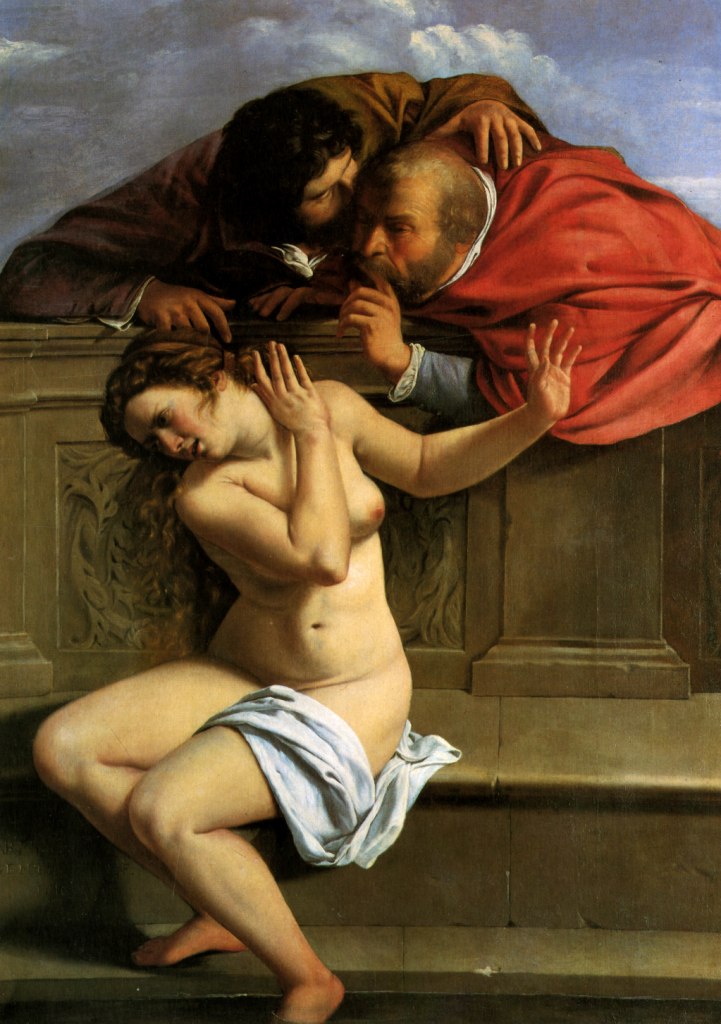
By Artemisia Gentileschi – Web Gallery of Art
https://commons.wikimedia.org/w/index.php?curid=50229
Since the historical record of art seems to have passed women by, Hessel sets out to balance this inequity by tracing the history of art by women artists only. It would be impossible to cover every woman artist in every era, so Hessel had to be selective.
This book is “not a definitive history—it would be an impossible task”, says Hessel, who acknowledges her book—at almost 500 pages—is merely skimming the surface.
Hessel’s history begins in the 1500s and continues right up into the 2020s. With an abundance of full-colour illustrations, often corresponding to those referred in the narrative, Hessel highlights accomplished women artists from each era, and across genres.
The Story of Art Without Men is divided into five sections, each focusing on significant shifts or movements in Western art history. In addition to painting, sculpture, and photography, Hessel also features pottery, performance art, and quiltmaking (the latter an art form generally overlooked by art historians.)
Although her book is largely focussed on Western European and North American artists, Hessel made considerable effort to include artists from all areas and cultures. Hessel seeks to “break down the stigma of elitism in art—art can be for anyone, and anyone can be part of this conversation—and to showcase artists so often excluded from the history books and courses I studied.”
To provide maximum space for women artists, Hessel chose to exclude what she refers to as “the clamour of men” from her book. The only references to men artists appear when they have copied a concept or a work of art from a woman artist (I’m looking at you, Andy Warhol!) Hessel doesn’t engage in man-bashing, however, but instead brings attention to accomplished woman artists who have often been passed over in the historical art record.
Hessel notes that there has been progress towards recognizing and including women artists—both in study and research, as well as curators endeavouring to change collections—although there is still inequities between genders in prices commanded by art.
I found The Story of Art Without Men, with its lavish illustrations and informative text, a beautiful book to read. Nearly every page illustrates a work of art, and the text is engaging—accessible, rather than academic.
I borrowed The Story of Art Without Men from the SDG Library (the Cornwall library has it too.) It’s also available through online retailers Indigo.ca and Amazon.ca.
For a related but different approach to women artists, see also Danielle Krysa’s book, A Big Important Art Book: Now with Women! (2018.) Each of fifteen chapters in the book centres on a theme or genre, and provides profiles of women artists, along with some inspiration for the artist within you. Available online from Indigo or Amazon; I borrowed a copy from our friendly CAGAC VP & treasurer, Yvonne.
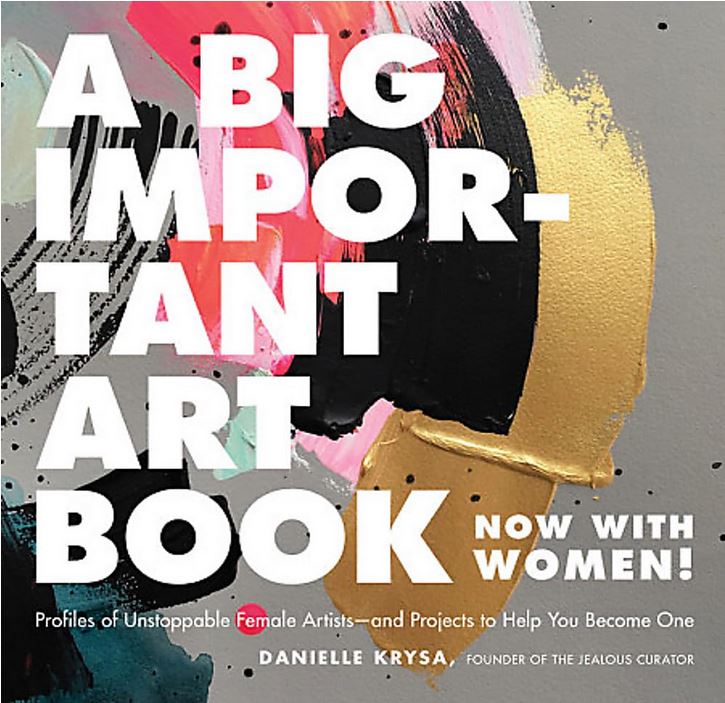
 Collectif
What a work! Thank you, Barbara, for bringing these interesting facts and book!
LikeLiked by 1 person
Fantastic information! This book is now on my reading list!
LikeLiked by 1 person
I’m so glad you reviewed this book Barbara! I heard Ms. Hessel interviewed about this book on CBC and then requested that the SDG library purchase it for their collection. I was thrilled that they did and I hope many people (women and men) read it. It is all that you have described. There could easily be a Volume Two.
LikeLike
Excellent review! I’m so glad you reviewed this book Barbara! I heard Ms. Hessel interviewed about this book on CBC and then requested that the SDG library purchase it for their collection. I was thrilled that they did and I hope many people (women and men) read it. It is all that you have described. There could easily be a Volume Two.
LikeLiked by 1 person