Today we introduce a bi-monthly column on books about art. With this initiative we hope to educate and entertain our members and readers.
Three reviewers, all Collectif writers — Susan Latreille, Barbara Lehtiniemi and Jessica MacLeod — will review tomes on photography, writing, myriad forms of visual arts, music, etc. Not all works will be non-fiction! Let the games begin!
It’s Not Only Rock ‘n’ Roll: Iconic Musicians Reveal the Source of Their Creativity, by Dr Jenny Boyd
Reviewed by Barbara Lehtiniemi
Before I introduce her book, I’ll first introduce its author, Jenny Boyd. Here we go: Boyd was a fashion model in 1960s London, as was her older sister Pattie Boyd. This connection is important, as Pattie went on to marry George Harrison of the Beatles; she later married Eric Clapton. Jenny herself married Mick Fleetwood of Fleetwood Mac—twice! After being immersed in the music and touring industry, Boyd attended university, eventually earning a PhD in Psychology. In addition to her books, Boyd also managed an addiction treatment centre.
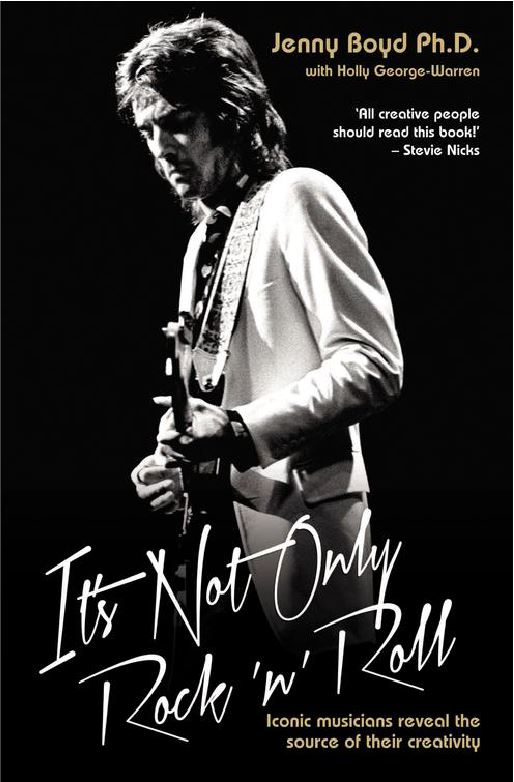
It’s Not Only Rock ‘n’ Roll has its roots in Boyd’s thesis for her doctorate. She did extensive interviews with 75 musicians delving into the psychology behind their creative processes. “I chose to study musicians,” Boyd writes, “because I believe their gift is very special. More pervasive and accessible than any other art form, music touches almost everyone.” Because of who Boyd was and who she knew, she had access to many big-name musicians, who freely shared the sources and methods of their creativity.
Boyd’s interviewees include Eric Clapton, George Harrison, Julian Lennon, Jackson Browne, David Crosby, Stephen Sills, Graham Nash, Don Henley, Keith Richards, Ringo Starr, Steve Winwood, Mick Fleetwood, Stevie Nicks, Joni Mitchell, and Sinéad O’Connor. (And that’s only one-fifth of the list.)
In the book’s introduction, Boyd writes, “While contemplating this topic for my dissertation it became obvious to me that the subject of creativity was something I’d always been fascinated with. Being surrounded by talented musicians for over 20 year was inspiring to me, but at the same time had often left me questioning my own sense of creativity.”
Boyd approaches the psychology behind creativity from several angles. First she explores the connection between childhood exposure to creative environments and a child’s inclination towards creative pursuits. Next she studies what impetus gave rise to these individuals pursuing careers in music. “Several musicians recalled feeling strongly out of place during childhood,” Boyd recounts. “For some it seems as though their guitar or drum kit gave them the companionship they lacked, as well as giving them a means of expression.”
Boyd delves into the unconscious mind and how it contributes to searing moments of super-focussed inspiration and flow. She also explores the concept of the collective unconscious, and the artists’ role in, and responsibility to, society at large. “Artists reflect the collective unconscious and thus give voice to the people,” writes Boyd. “By the very nature of being artists, they are channels from the collective unconscious, and in their quest to create, heroes.”
No book about the rock ‘n roll scene of the 60s and 70s would be complete with discussing drugs and alcohol. Boyd’s interviewees candidly share the role drugs and alcohol played in their creative processes, as well as the limitations these substances present when use burgeons into abuse.
Boyd closes her book by contemplating the creative potential she believes is inherent in everyone. “All human beings have the potential to be creative in many different ways,” writes Boyd. She acknowledges that “society is not structured to help people find their creative gifts” and expressing creativity often takes courage.
Boyd’s conclusion: “It is up to those of us who are not musicians to find our own individual talents and, therefore, to find peace and a feeling of wholeness within ourselves. I truly hope the answers to which I have been led by so many wonderful musicians will give direction to others on the path to self-expression.”
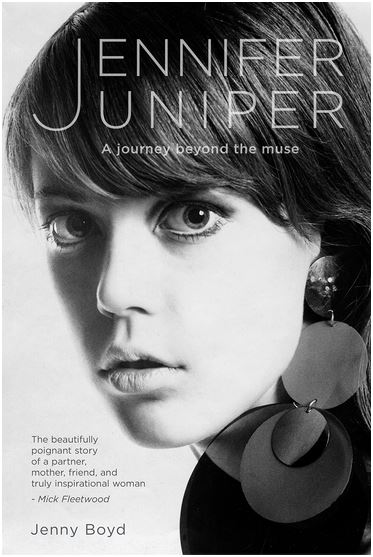
Although I didn’t find Boyd’s book delved as deeply into the psychology of creativity as I hoped, I found it an entertaining read, full of enlightening examples of the creative processes of musicians and bands I am familiar with. (I was intrigued enough by Boyd’s personal history that I also read her extremely dishy memoir Jennifer Juniper: A journey beyond the muse, which she published in 2020.)
It’s Not Only Rock ‘n’ Roll , published in 2014, is the updated and illustrated version of Boyd’s earlier book, Musicians in Tune: Seventy-Five Contemporary Musicians Discuss the Creative Process (1992), and has also been published under the title Icons of Rock.
I borrowed It’s Not Only Rock ‘n’ Roll in ebook format from SDG Library’s cloudLibrary service. It’s also available in paper and ebook versions from Indigo.ca, Amazon.ca, and (used from) BetterWorldBooks.com.
 Collectif
Thank you, Barb, for this thorough review of a book I would have never thought of borrowing before. I really appreciate the structure of your post and your opinion about it. Have a fantastic weekend.
LikeLiked by 1 person
What a great first pick as it applies to all artists of whatever bent. Interesting read, Barb.
LikeLiked by 1 person
I should add a caution that these books can be a bit addictive! I’ve since read “Clapton” by Eric Clapton and “Wonderful Tonight” by Pattie Boyd.
LikeLike
[…] (This review was originally published September 16, 2023 on the Glengarry Artists’ Collective blog: https://cagac.ca/2023/09/16/collectif-reads-16-sep2023/.) […]
LikeLike